

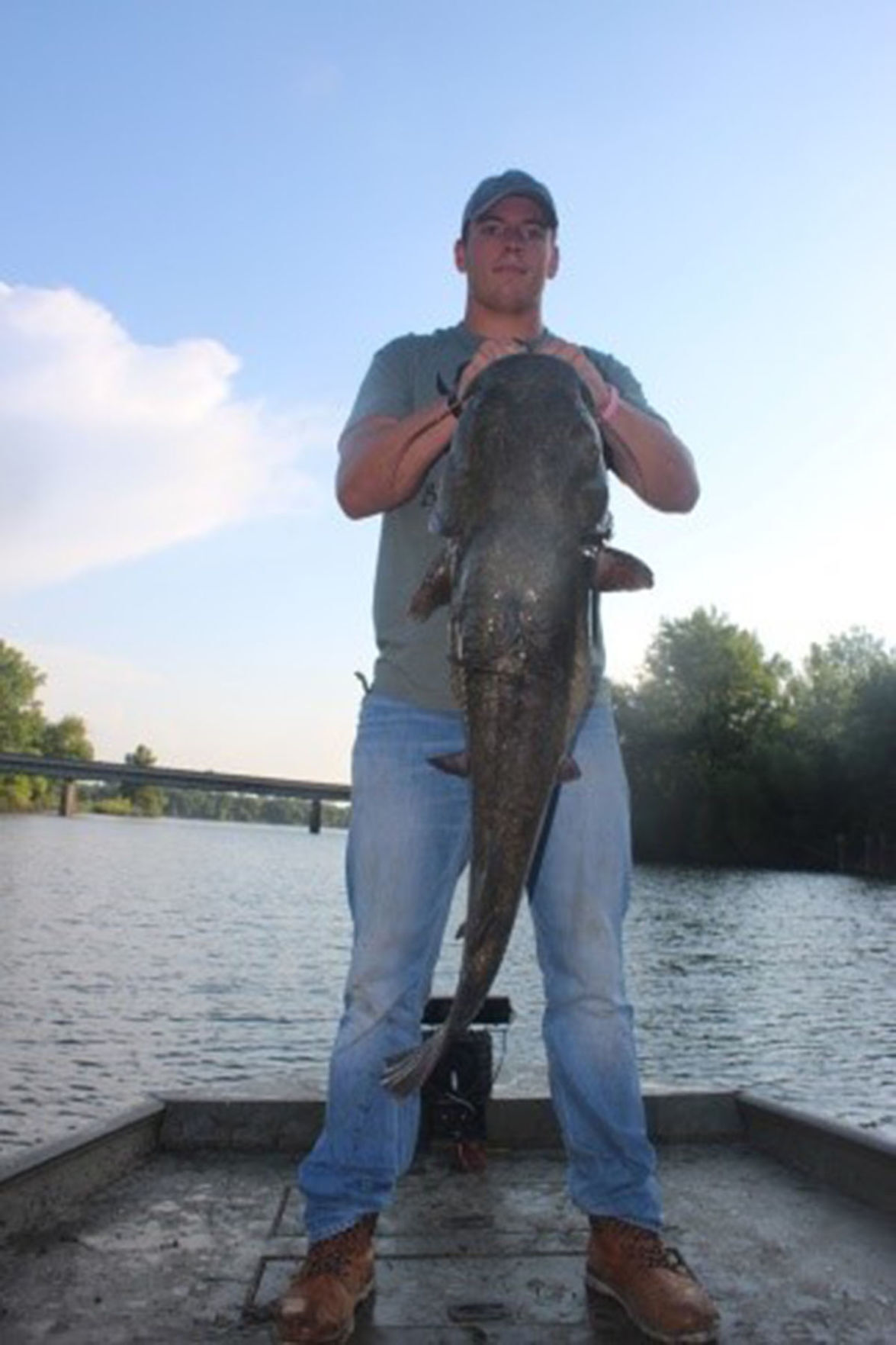
One of the largest fish in the state of Nebraska, flathead catfish. Wyatt Gutzmer holding a 46 pound flathead.
Fish are among the most biodiverse and interesting vertebrate groups on the planet, playing vital ecosystem roles, supporting considerable commercial, recreational, and artisanal (traditional) fisheries, and delivering critical ecosystem goods and services for the world's human population. These intrinsic, ecological, and socioeconomic values of fish are well recognized.
Out of almost 110 fish species that are documented in Nebraska, eight out of ten of the most common species sampled over the last 60 years are fish that would be considered small fishes or minnow species. Most of these fish have been sampled by seining in rivers and streams throughout the state on periodic sampling basis to note long-term population trends. In general, some minnow species populations have increased in size, some have decreased and some have stayed the same
It is apparent that through point and non-point source pollution in our water systems has caused serious declines in the diversity/abundance of our fish populations; especially the less tolerant species such as dace, darters and shiners. There is much effort needed for baseline data of our fish population going forward to restore habitats for the declining populations we are seeing.
Groups or schools of minnows can be found in most Nebraska waters, particularly in flowing water. Small fish are important in converting plants, animals and detritus (organic matter) into food for larger fish and birds. Minnows breed in the spring or summer and the differences between males and females are really obvious.
Females are generally larger and some males become brightly colored during the breeding season. These colors attract females and sometimes even the males get bumps on their heads called tubercles. Minnows generally grow to adult size rapidly and attain sexual maturity within two years. Some minnows live to be four years old.
Green sunfish, creek chubs, and carp have all increased in that time period. Other fish species like flathead chubs, plains minnows, common shiners and sturgeon chub have had significant declines during that same time period. Fathead minnows, bigmouth shiners and sand shiners were dominant prior to 1943 and remain dominant and very common even today
Many fish species now are threatened by habitat destruction, degradation, modification, and fragmentation resulting from siltation, reduced water quality, tributary impoundment, stream channelization, and stream dewatering. The species also are impacted by introduced predaceous fishes.
Increased surveillance and monitoring of our streams are required to assist with future management decisions. Continuing tributary impoundment and channelization represent the greatest existing threats to these rare species. Over-grazing of riparian zones (banks of a natural course of water) and the removal of riparian vegetation to increase tillable acreage greatly diminish a watershed’s ability to filter sediments, organic wastes and other impurities from the stream system. Irrigation draw-down of groundwater levels affects surface and subsurface flows which can impact the remaining fish species.
By demonstrating the importance of fish across all facets of life, we hope that this exploration leads to greater conservation, sustainable management, and ethical treatment of fish now and into the future.
Michael P. Gutzmer, PhD is principal and owner of New Century Environmental LLC and provides environmental consulting services in the Great Plains. NCE works with water, wetlands, habitat development threatened and endangered species and pollution problems. Please email me at mgutzmer@newcenturyenvironmental.com
Subscribe to our Daily Headlines newsletter.
December 12, 2020 at 01:00PM
https://ift.tt/3a2whlB
A few facts about Nebraska’ smaller Fishes - Columbus Telegram
https://ift.tt/35JkYuc
Fish


No comments:
Post a Comment